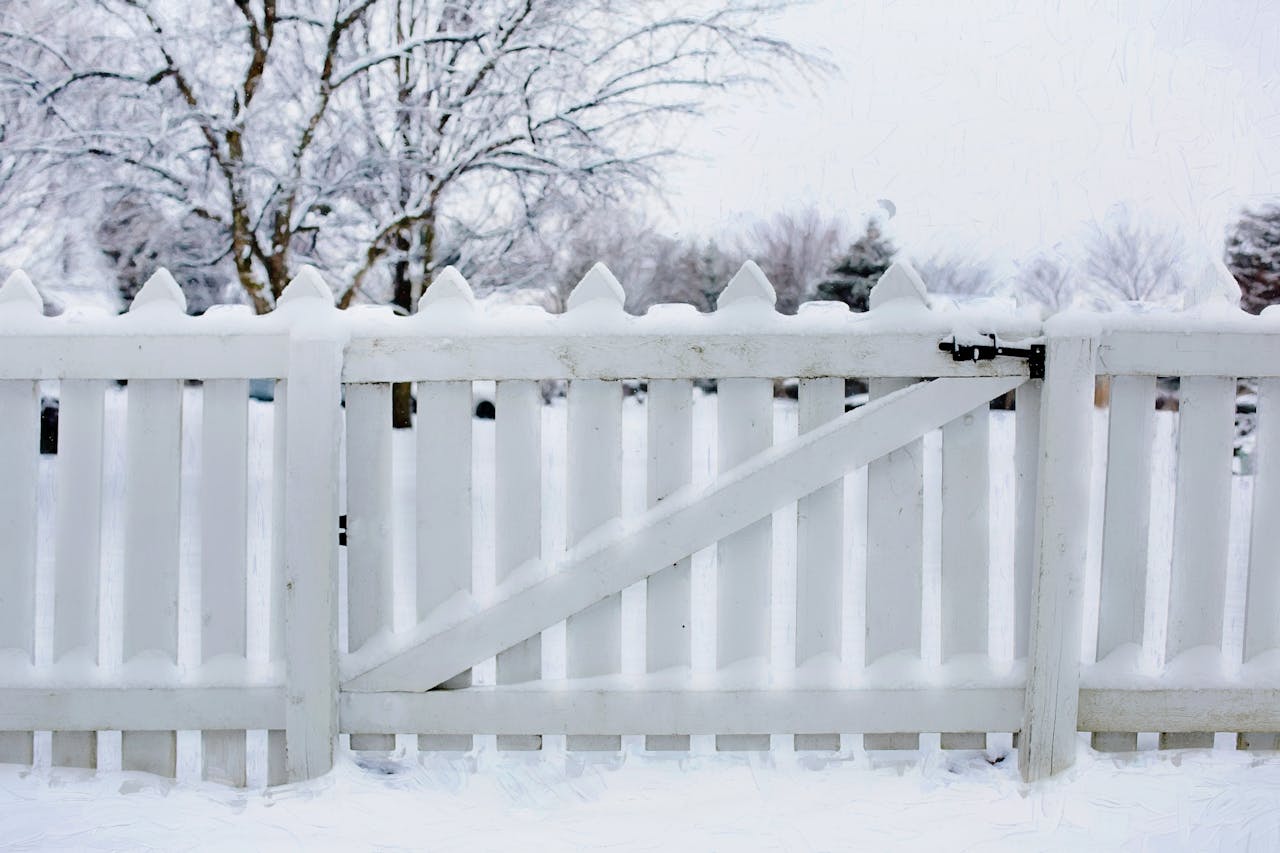
In Minnesota, winter is tough on almost everything—including fences, especially fence posts. While it is technically possible to install a fence during the winter months, doing so can create problems that may not appear until the following spring.
Understanding why comes down to soil science and freeze-thaw cycles.
How Minnesota’s Freeze–Thaw Cycle Affects Fences
During winter and early spring, Minnesota soil repeatedly freezes and thaws. Water in the ground expands when it freezes and contracts when it melts.
This constant expansion and contraction causes soil movement. When fence posts are installed in frozen ground, the surrounding soil often hasn’t fully settled or compacted.
When the ground thaws later, the post can shift.
Frost Heave
The biggest issue is something called frost heave.
Frost heave occurs when frozen water in the soil pushes objects upward. Fence posts installed during winter are especially vulnerable because the soil around them may not be properly compacted or stable.
Over time this can cause:
- Posts rising out of the ground
- Posts sinking unevenly
- Fence sections tilting or leaning
- A wavy fence line that looks uneven
In severe cases, the entire fence can require resetting.
Why Spring, Summer and Fall Are Better
When fences are installed in warmer seasons:
- Soil can be properly compacted
- Concrete cures correctly
- Posts settle naturally with the ground
This results in a straighter, longer-lasting fence.
Our Approach
At North Country Fence Co., we prioritize installations during seasons when the ground conditions allow us to set posts properly.
Our goal isn’t just to build a fence—it’s to build one that still looks straight and solid years from now, not just the day it’s installed.
Final Thoughts
A fence should last decades. Installing it during unstable winter ground conditions can shorten its lifespan and lead to costly repairs.
That’s why careful timing matters.
Contact us today to get started.