
When homeowners start looking into fencing, one of the first questions they ask is what material they should choose. The truth is that the best fence depends on what you want the fence to accomplish.
Some homeowners want privacy, some want to define their property lines, and others want something that looks natural in their yard. Each material has strengths and weaknesses, and understanding those differences can help you make the right decision.
When Vinyl Fencing Makes the Most Sense
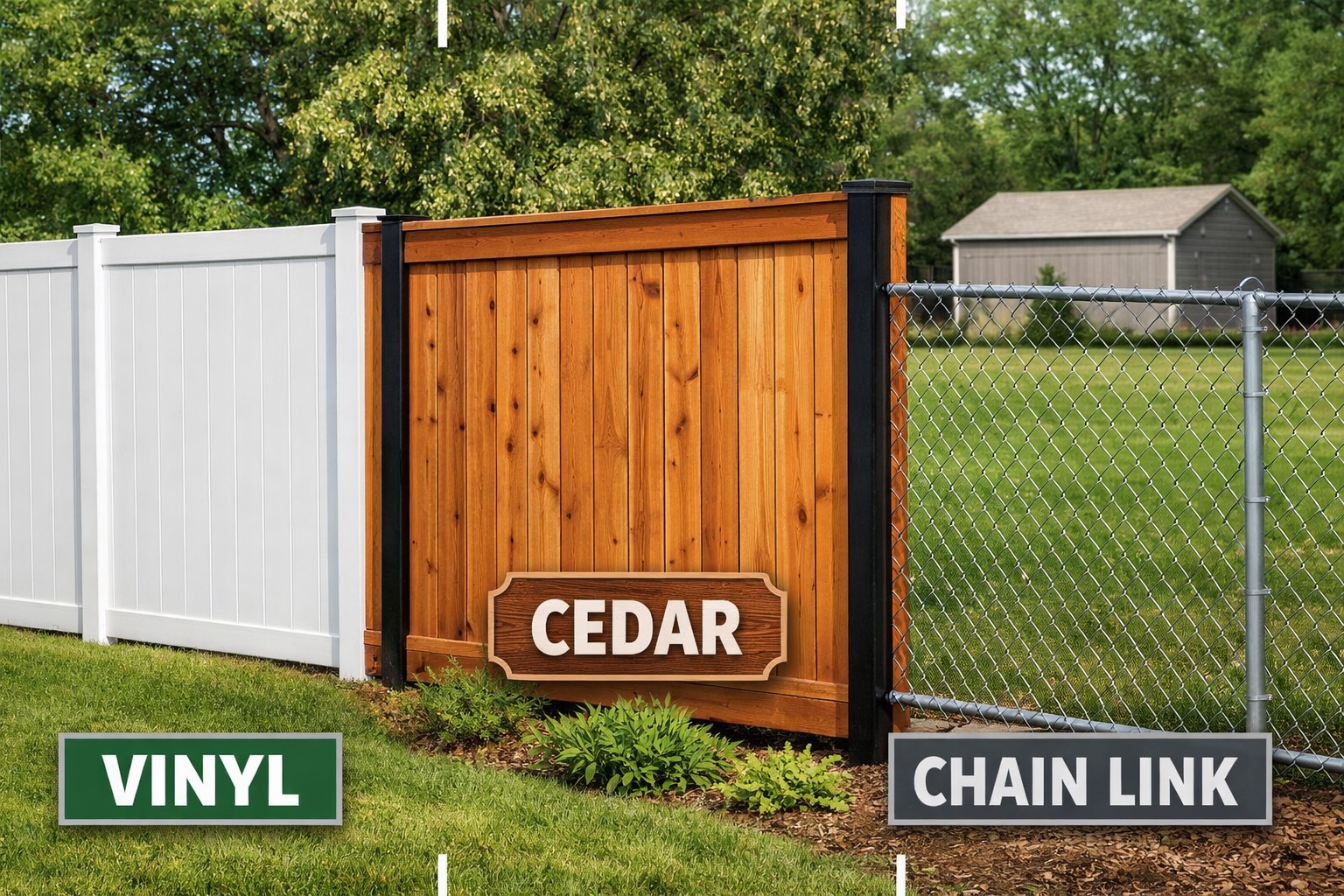
If your main goal is privacy with minimal maintenance, vinyl fencing is often the best option.
Vinyl fences provide a clean and consistent look that holds up well over time. They do not rot, they do not require staining or sealing, and they are very resistant to Minnesota’s weather.
For homeowners who want a long-term privacy fence that requires very little upkeep, vinyl is often the most practical choice.
When Chain Link Is the Best Option
If your main goal is to define your property line or contain pets, chain link fencing is usually the most cost-effective solution.
Chain link fences are durable, relatively quick to install, and typically the most affordable fencing option. They are commonly used for:
- Backyards
- Dog containment
- Property boundaries
- Larger lots where cost matters
While they do not provide privacy, they are extremely practical and long-lasting.
When a Wood Fence Is the Right Fit
Wood fences are still one of the most popular choices for homeowners who want a natural, traditional look. A well-built wood fence can add warmth and character to a property that other materials simply cannot replicate.
Wood fences also allow for a wide variety of styles, including privacy fences, decorative pickets, and horizontal designs.
However, the type of wood used makes a big difference in how the fence performs over time.
Why We Recommend Cedar for Wood Fences
Cedar is widely considered the best material for wood fencing because it is naturally resistant to rot, moisture, and insects.
Compared to other wood types, cedar is also more stable. It is less likely to twist, warp, or split as it ages.
Because of its reliability, we are comfortable standing behind cedar fencing with a workmanship warranty. When properly installed, cedar fences provide both durability and a beautiful natural appearance.
The Reality of Pressure-Treated (Green-Treat) Wood
Pressure-treated lumber—often called “green treat”—is another option some homeowners consider because it can be less expensive than cedar.
However, pressure-treated lumber can be unpredictable as it dries. Boards may twist, warp, or shrink over time, which can affect the appearance of the fence.
We are happy to install pressure-treated wood fencing if a homeowner prefers it. When we leave the job site, the fence will be straight, secure, and built correctly.
However, because the material itself can change as it dries, we cannot offer a warranty on green-treated wood fences. The movement that occurs later is related to the material itself rather than the installation.
Choosing the Right Fence for Your Property
Every fence project is a balance between appearance, durability, and cost.
- Vinyl is often the best option for long-term privacy with low maintenance.
- Chain link is the most practical choice for affordable boundaries and pet containment.
- Cedar wood fences provide a natural look and long-term reliability.
At North Country Fence Co., our goal is to help homeowners choose a fence that fits their needs and will hold up well in Minnesota’s climate.
A fence is an investment in your property, and choosing the right materials makes all the difference.