If keeping your dog safely contained is a top priority, the right fence makes all the difference. Not every fence works equally well for every dog — a determined digger, a fence-jumper, and a couch potato all have very different needs. Here’s how to choose the right option for your pet.
Chain Link Fencing
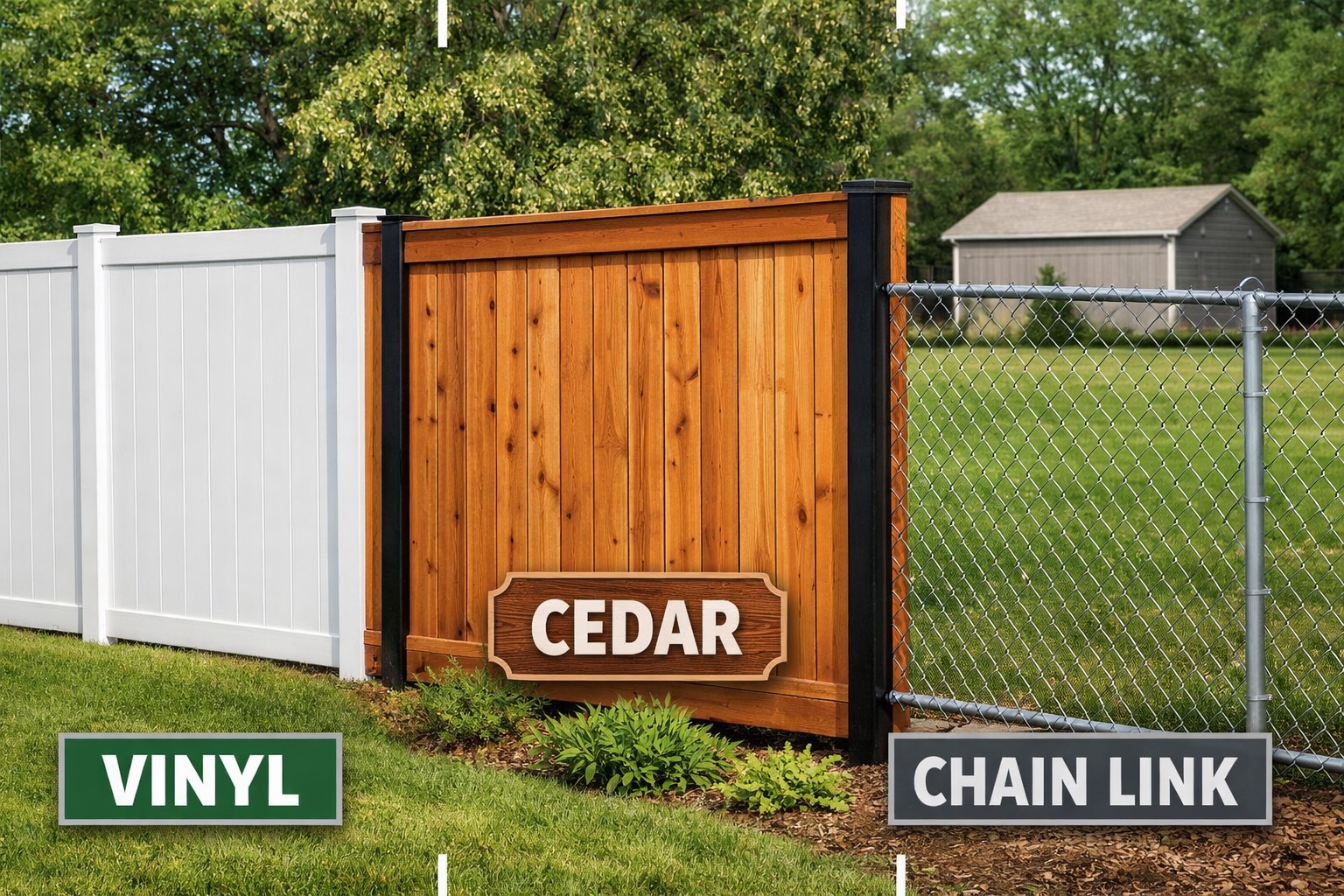
Chain link is one of the most practical and budget-friendly options for dog containment. It’s durable, low-maintenance, and tough for most dogs to damage or chew through.
Best for: Dogs that like to dig. Installers can bury the bottom of the fence several inches into the ground to help stop dogs from tunneling out.
Consider: Chain link offers visibility in both directions, which can encourage barking or fence-running in dogs that react to passing people, animals, or cars.
Wood Privacy Fences
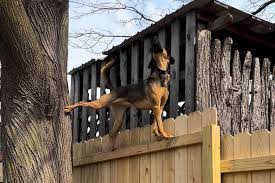
A solid wood fence blocks your dog’s view of the outside world — which often means less barking, lunging, and reactive behavior triggered by things passing by. The height and solid construction also make it difficult for most dogs to climb or jump over.
Best for: Reactive dogs, or owners who want privacy along with containment.
Consider: Requires more upkeep than chain link or vinyl, and gaps at the bottom may need attention for digging breeds.
Vinyl Fencing
Vinyl delivers the same visual blocking and solid containment as wood, but with much less maintenance — no staining or sealing to worry about. It also holds up well against weather and resists chewing and clawing.
Best for: Owners who want the privacy benefits of wood without the long-term upkeep.
Consider: Gaps at the bottom may need attention for digging breeds.
Ornamental Fencing (Aluminum & Steel)
Ornamental metal fencing — typically aluminum or steel with vertical pickets — offers a more decorative, upscale look while still providing reliable containment for many dogs. It’s strong, low-maintenance, and won’t rot, rust (when properly coated), or warp over time.
Best for: Calmer dogs and homeowners who want curb appeal alongside containment. Because there are no horizontal rails on the outside, it’s also harder for dogs to climb than some other fence styles.
Consider: Ornamental fencing offers full visibility, similar to chain link, so it isn’t ideal for reactive or highly excitable dogs. Picket spacing matters too — small or narrow-bodied dogs (like Dachshunds or small terriers) may be able to squeeze through wider spacing, so tighter picket spacing is important for smaller breeds. It also doesn’t stop digging on its own.
Choosing the Right Fence Height
Height should match your dog’s size, breed, and athleticism — not just a one-size-fits-all standard.
Typical recommendations include:
| Dog Type | Recommended Height |
| Small breeds (low jumpers) | 4 feet |
| Medium to large breeds | 5-6 feet |
| Athletic, agile, or known jumping/climbing breeds (e.g. Huskies, Border Collies, Australian Shepherds) | 6 feet |
If your dog is a known escape artist, pairing the right fence height with the right material (and burying the base for diggers) gives you the most reliable containment.
Not Sure Which Fence Is Right for Your Dog?
Every yard and every dog is different. Our team can help you choose the best fence for your pet’s size, breed, and behavior — and make sure it’s installed to actually keep them safely home.
Give us a call today or submit our form to schedule an estimate