FAQ
Installing a fence raises a lot of questions for homeowners. Below are answers to some of the most common questions we hear from homeowners in the Twin Cities and Minnesota metro area.
Planning & Regulations
Do I need a permit to install a fence in Minnesota?
Permit requirements vary by city. Some municipalities require a permit for fences above a certain height or in specific locations, while others allow smaller residential fences without permits. Because rules vary, it’s important to check your city’s regulations before starting a project.
How tall can a residential fence be?
In many Minnesota cities, residential fences are typically limited to:
- 4 feet in front yards
- 6 feet in side and back yards
Some cities allow taller fences with special approval.
Can I install a fence directly on the property line?
Often yes, but the homeowner is responsible for verifying the exact location of the property line before installation. If there is uncertainty about the boundary, a property survey may be recommended.
Do I need to talk to my neighbor before installing a fence?
It is not always legally required, but it is usually a good idea. Talking with your neighbor ahead of time can help avoid misunderstandings about fence placement or property boundaries.
Do I need a property survey before installing a fence?
Not always, but if property boundaries are unclear or disputed, a survey can help ensure the fence is installed in the correct location.
Fence Installation
How long does fence installation take?
Most residential fence installations take one to three days depending on the size of the yard, materials used, and weather conditions.
What happens during fence installation?
Fence installation typically includes:
- Marking the fence layout
- Digging post holes
- Setting posts in concrete
- Installing rails and panels
- Installing gates
- Final cleanup
How deep should fence posts be installed?
A common rule of thumb is that about one-third of the fence post should be in the ground. For example, a 6-foot fence typically uses posts installed around 2½–3 feet deep. In Minnesota, posts are often installed 36 inches or deeper to help reduce movement caused by frost.
How far apart are fence posts placed?
Fence posts are commonly spaced 6–8 feet apart, depending on the fence type and materials used.
Will fence installation damage my lawn?
Some minor lawn disturbance can occur when digging post holes or moving materials. However, most yards recover quickly and contractors typically clean up the work area after installation.
What happens to the dirt from the post holes?
When post holes are dug, some of the soil is used to backfill around the posts or concrete. Each hole usually produces extra dirt that cannot fit back into the hole. That leftover soil is typically left on the property for the homeowner to spread, use for landscaping, or dispose of as they prefer.
Fence Materials & Lifespan
How long does a fence last in Minnesota?
Fence lifespan depends on the material and maintenance.
Typical ranges include:
- Wood fences: 15–20 years
- Vinyl fences: 20–30 years
- Metal fences: several decades with minimal maintenance
Minnesota’s freeze-thaw cycles and moisture can affect longevity.
What type of fence is best for Minnesota weather?
Common choices include:
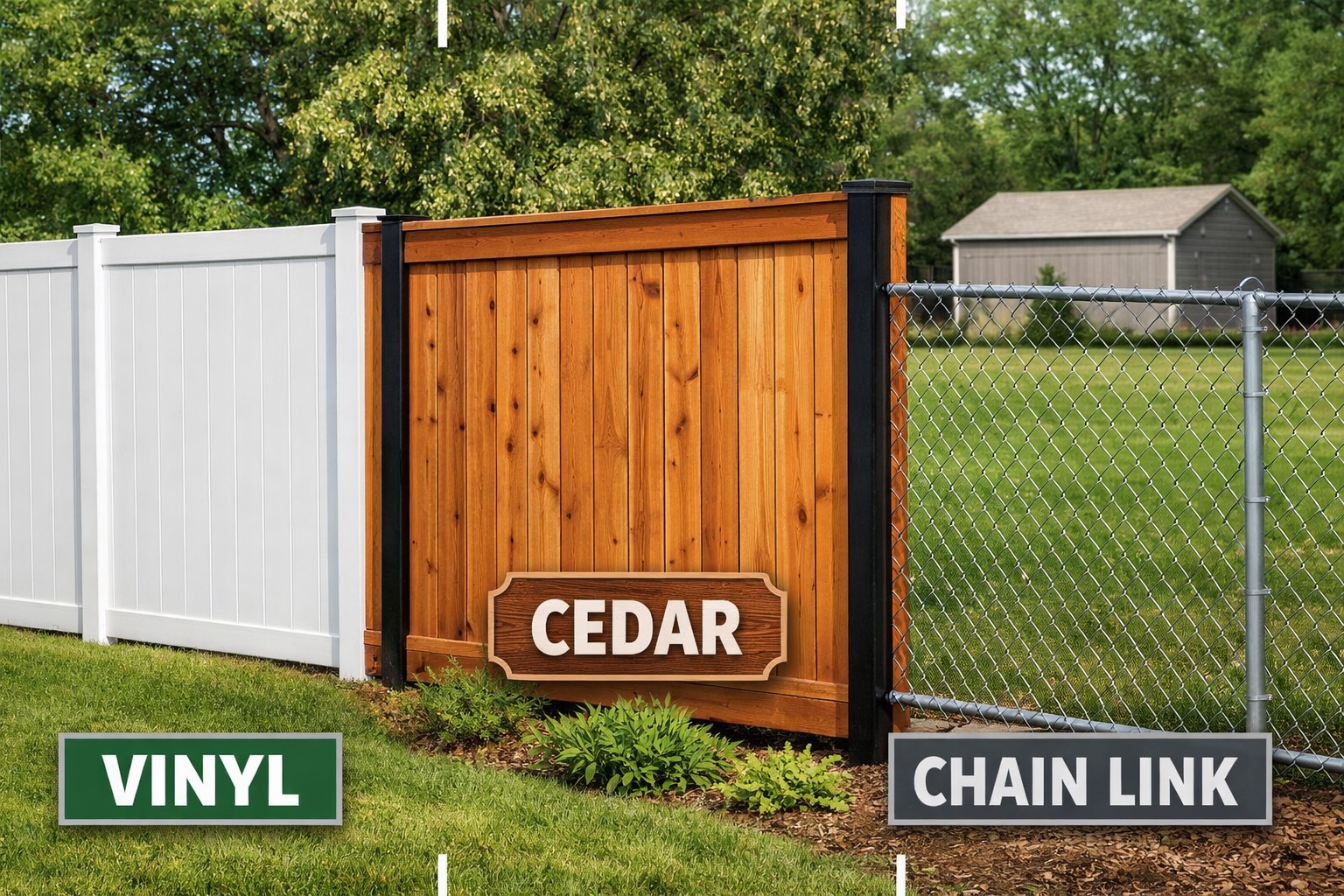
- Wood fences – traditional appearance and privacy
- Vinyl fences – low maintenance and durable
- Chain link fences – cost-effective and strong
The best option depends on your budget, maintenance preferences, and the purpose of the fence.
What is the best fence for dogs?
Many dog owners choose wood privacy fences, vinyl privacy fences, or chain link fences depending on their dog’s size and behavior. Privacy fences can help prevent jumping and visual distractions, while chain link fences provide durability and visibility.
Installation Timing
What time of year is best to install a fence in Minnesota?
Fence installation is most common from spring through fall(early winter some years), but fences can sometimes be installed in winter if ground conditions allow. Spring and summer are the busiest seasons.
Can a fence be installed in winter?
Sometimes. Frozen ground can make digging more difficult, and some contractors pause installations during extreme cold. However, winter installation may still be possible depending on soil conditions and equipment.
Maintenance
How often should a wood fence be sealed or stained?
Wood fences are typically sealed or stained every 3–5 years to help protect them from moisture, UV exposure, and weathering. Cedar fences can often go longer between treatments, depending on the desired appearance and level of protection.
Pressure-treated wood should not be sealed or stained immediately after installation, as the wood needs time to dry out. In most cases, it should be allowed to dry for several months before applying stain or sealant.
Do vinyl fences require maintenance?
Vinyl fences require very little maintenance. Occasional cleaning with water or mild soap will usually keep them looking good, and vinyl does not need to be stained, sealed, or painted like wood fences.
Costs & Planning
How much does a fence cost?
Fence cost varies widely depending on the material, length, terrain, and number of gates. Wood, vinyl, chain link, and metal fences all have different price ranges. Getting a quote is the best way to determine the cost for a specific property.
Do fence installers remove old fences?
Many fence contractors offer old fence demolition and removal as part of the installation process. These services may be priced separately depending on the project.
Final Questions
How long will my yard look disturbed after installation?
Most yards recover quickly after installation. Any disturbed soil usually settles naturally, and grass typically regrows over time.
Can fences be installed on sloped yards?
Yes. Fences can be installed on sloped terrain using different methods depending on the fence type. Wood and vinyl fences are often installed using stepped or racked panels, while chain link fences can follow the slope using a bias cut that allows the mesh to match the grade.
Do you offer a warranty?
We offer a 10-year workmanship warranty and a 5-year warranty on materials for all fences, excluding pressure-treated wood.
What cities do you service?
We work across all of Minnesota and some western Wisconsin cities – You can view city information here.
Have more questions?
If you have additional questions, feel free to reach out. We’re always happy to help homeowners understand their options before starting a project.